The Magic Mountain

The Magic Mountain

Thomas Mann

Classics / Fiction / Philosophy

With this dizzyingly rich novel of ideas, Thomas Mann rose to the front ranks of the great modern novelists, winning the Nobel Prize in Literature in 1929. The Magic Mountain takes place in an exclusive tuberculosis sanatorium in the Swiss Alps–a community devoted to sickness that serves as a fictional microcosm for Europe in the days before the First World War. To this hermetic and otherworldly realm comes Hans Castorp, an “ordinary young man” who arrives for a short visit and ends up staying for seven years, during which he succumbs both to the lure of eros and to the intoxication of ideas. Acclaimed translator John E. Woods has given us the definitive English version of Mann’s masterpiece. A monumental work of erudition and irony, sexual tension and intellectual ferment, The Magic Mountain is an enduring classic. (Book Jacket Status: Jacketed)
Read online
  • 1 147
Doctor Faustus

Doctor Faustus

Thomas Mann

Classics / Fiction / Philosophy

"The thorn was in my flesh," Mann said about the genesis of Doctor Faustus, which was composed during World War II.  "I knew what I was setting out to do and what task I was imposing upon myself:  to write nothing else than the novel of my era, disguised as the story of an artist's life, a terribly imperilled and sinful artist." Adrian Leverkuhn, a former theological student who has become a composer, enters symbolically into a pact with the devil in exchange for two and a half decades of inspired work.  Narrated by Serenus Zeitblom, Leverkuhn's faithful friend, this retelling of the Faust legend turns on the composer's slow descent into syphilitic paralysis.  Densely orchestrated with musical constructions and what Mann called historical "montage", the book discourses on the tragedy of Germany, the Schonbergian twelve-tone system, Nietzche, the life of Tchaikovsky, and the introduction of syphilis into Europe.  Mann described Doctor Faustus as "difficult, weird, uncanny, sad as life."
Read online
  • 742
Royal Highness

Royal Highness

Thomas Mann

Classics / Fiction / Philosophy

Royal Highness is the delightfully ironic tale of a small, decadent German duchy and its invigoration by the intellect and values of an independent-minded American woman. Peopled with a range of characters from aristocrat to artisan, Royal Highness provides a microcosmic view of Europe before the Great War.
Read online
  • 738
Joseph and His Brothers

Joseph and His Brothers

Thomas Mann

Classics / Fiction / Philosophy

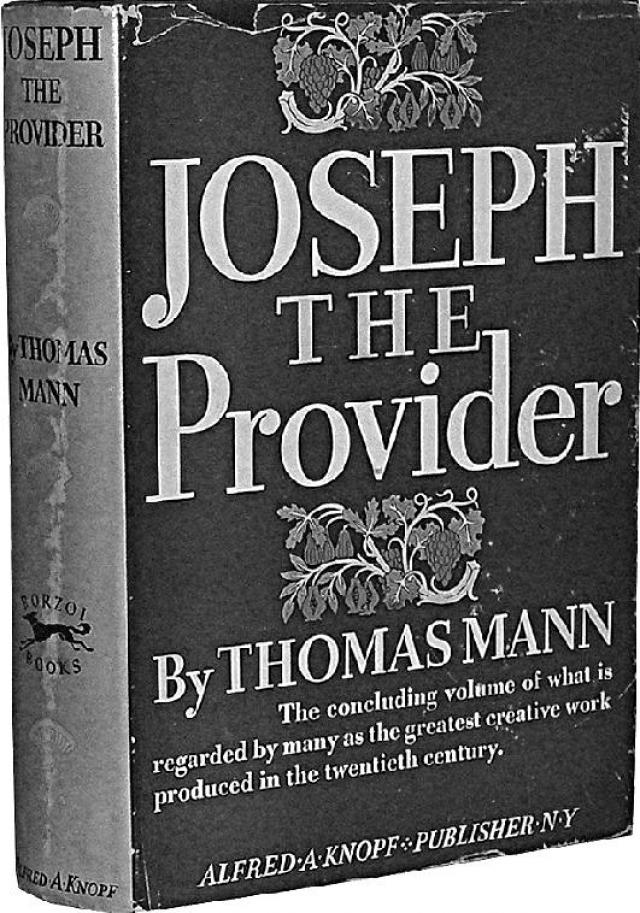
This remarkable new translation of the Nobel Prize-winner’s great masterpiece is a major literary event. Thomas Mann regarded his monumental retelling of the biblical story of Joseph as his magnum opus. He conceived of the four parts–The Stories of Jacob, Young Joseph, Joseph in Egypt, and Joseph the Provider–as a unified narrative, a “mythological novel” of Joseph’s fall into slavery and his rise to be lord over Egypt. Deploying lavish, persuasive detail, Mann conjures for us the world of patriarchs and pharaohs, the ancient civilizations of Egypt, Mesopotamia, and Palestine, and the universal force of human love in all its beauty, desperation, absurdity, and pain. The result is a brilliant amalgam of humor, emotion, psychological insight, and epic grandeur. Now the award-winning translator John E. Woods gives us a definitive new English version of Joseph and His Brothers that is worthy of Mann’s achievement, revealing the novel’s exuberant polyphony of ancient and modern voices, a rich music that is by turns elegant, coarse, and sublime. --front flap
Read online
  • 659
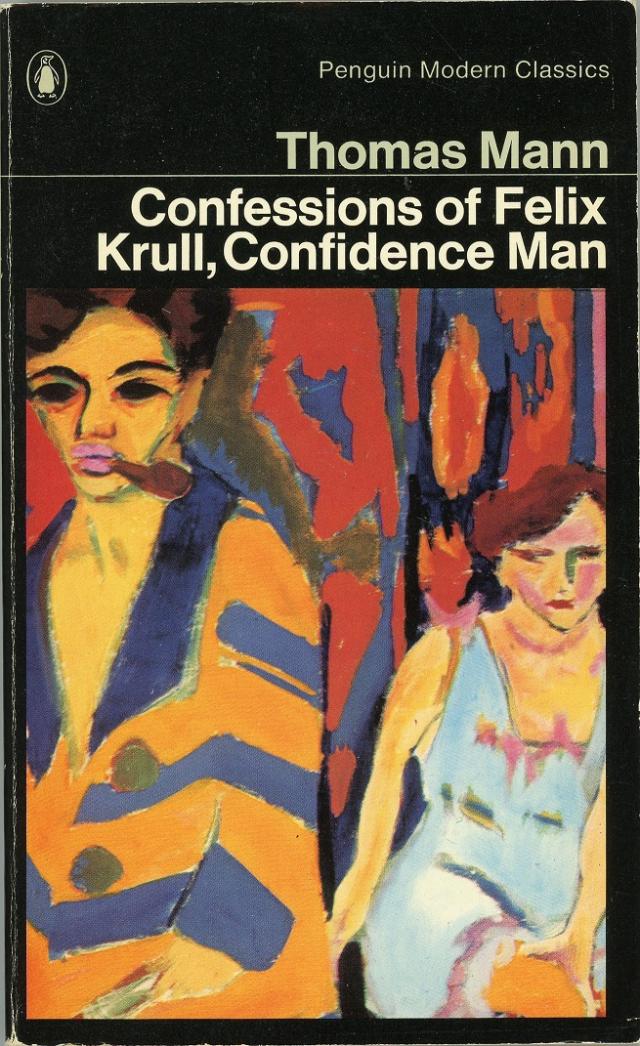
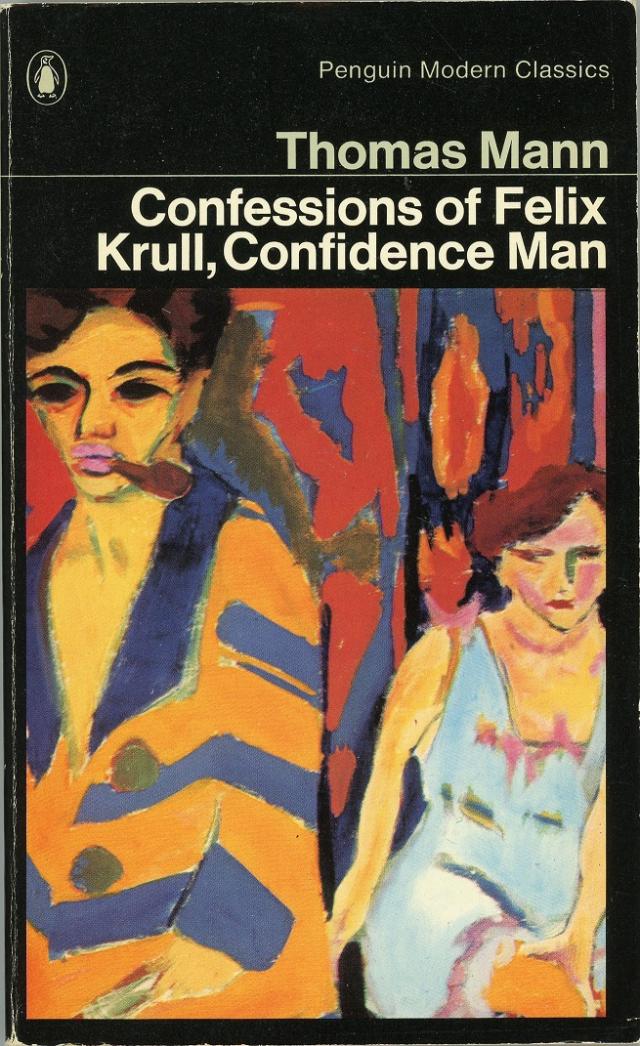
Confessions of Felix Krull, Confidence Man: The Early Years

Confessions of Felix Krull, Confidence Man: The Early Years

Thomas Mann

Classics / Fiction / Philosophy

Thomas Mann's final novel recounts the strange and entranced career of the gifted swindler, Felix Krull, through his childhood and early manhood. Krull is a man unhampered by moral precepts that govern the conduct of ordinary mortals, and this natural lack of scruple, coupled with his formidable mental and physical endowments, enables him to develop the arts of subterfuge and deception with astonishing success and to rise swiftly from poverty to affluence. Following Krull along the shady paths his nature has destined him to take, the reader moves through a world peopled by bizarre characters from the lowest to the highest reaches of European society. Chameleon-like, Krull readily adapts himself to the situation of the moment, and so adept in the practices of chicanery does he become that his victims almost seem to count themselves privileged. And so it is too with the women who encounter the irresistible Krull, for where Krull is, the normal laws of human behavior are in suspense. Originally the character of Felix Krull appeared in a short story Mann wrote in 1911. The story wasn't published until 1936, in the book Stories of Three Decades along with 23 other stories written from 1896 to 1929, the year in which he was awarded the Nobel Prize for Literature. Much later, he expanded the original story into a novel, managing to finish and publish Part 1, "The Early Years," of the Confessions of Felix Krull to great public success. Due to Mann's death in 1955 the saga of the morally flexible and irresistible con-man remains unfinished.
Read online
  • 576
Buddenbrooks: The Decline of a Family

Buddenbrooks: The Decline of a Family

Thomas Mann

Classics / Fiction / Philosophy

A Major Literary Event: a brilliant new translation of Thomas Mann's first great novel, one of the two for which he was awarded the Nobel Prize in literature in 1929. Buddenbrooks, first published in Germany in 1900, when Mann was only twenty-five, has become a classic of modem literature -- the story of four generations of a wealthy bourgeois family in northern Germany. With consummate skill, Mann draws a rounded picture of middle-class life: births and christenings; marriages, divorces, and deaths; successes and failures. These commonplace occurrences, intrinsically the same, vary slightly as they recur in each succeeding generation. Yet as the Buddenbrooks family eventually succumbs to the seductions of modernity -- seductions that are at variance with its own traditions -- its downfall becomes certain. In immensity of scope, richness of detail, and fullness of humanity, Buddenbrooks surpasses all other modem family chronicles; it has, indeed, proved a model for most of them. Judged as the greatest of Mann's novels by some critics, it is ranked as among the greatest by all. Thomas Mann was awarded the Nobel Prize for literature in 1929. From the Hardcover edition.
Read online
  • 450
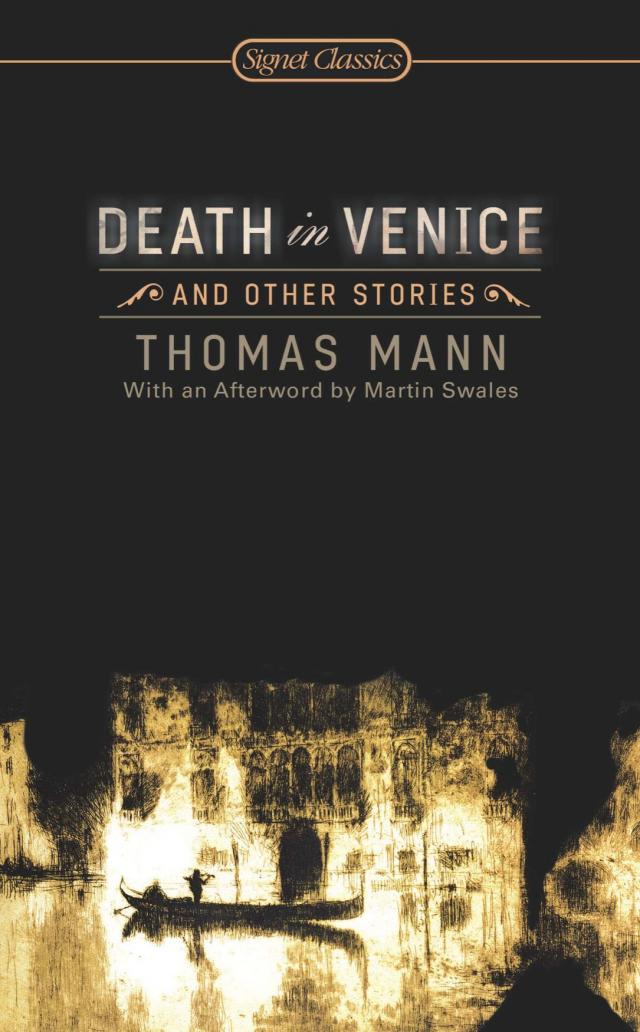
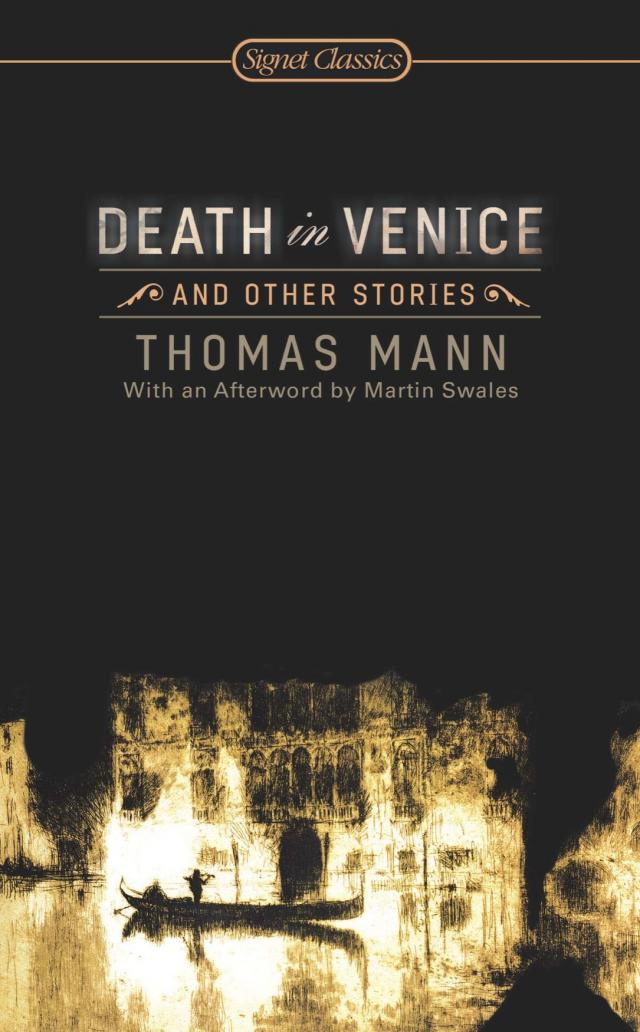
Death in Venice and Other Tales

Death in Venice and Other Tales

Thomas Mann

Classics / Fiction / Philosophy

Featuring his world-famous masterpiece, "Death in Venice," this new collection of Nobel laureate Thomas Mann's stories and novellas reveals his artistic evolution. In this new, widely acclaimed translation that restores the controversial passages that were cut out of the original English version, "Death in Venice" tells about a ruinous quest for love and beauty amid degenerating splendor. Gustav von Aschenbach, a successful but lonely author, travels to the Queen of the Adriatic in search of an elusive spiritual fulfillment that turns into his erotic doom. Spellbound by a beautiful Polish boy, he finds himself fettered to this hypnotic city of sun-drenched sensuality and eerie physical decay. Also included in this volume are eleven other stories by Mann: "Tonio Kroger," "Gladius Dei," "The Blood of the Walsungs," "The Will for Happiness," "Little Herr Friedmann," "Tobias Mindernickel," "Little Lizzy," "Tristan," "The Starvelings," "The Wunderkind," and "Harsh Hour." All of the stories collected here display Mann's inimitable use of irony, his subtle characterizations, and superb, complex plots.
Read online
  • 313
Death in Venice

Death in Venice

Thomas Mann

Classics / Fiction / Philosophy

The world-famous masterpiece by Nobel laureate Thomas Mann -- here in a new translation by Michael Henry Heim Published on the eve of World War I, a decade after Buddenbrooks had established Thomas Mann as a literary celebrity, Death in Venice tells the story of Gustav von Aschenbach, a successful but aging writer who follows his wanderlust to Venice in search of spiritual fulfillment that instead leads to his erotic doom. In the decaying city, besieged by an unnamed epidemic, he becomes obsessed with an exquisite Polish boy, Tadzio. "It is a story of the voluptuousness of doom," Mann wrote. "But the problem I had especially in mind was that of the artist's dignity."
Read online
  • 272
Buddenbrooks

Buddenbrooks

Thomas Mann

Classics / Fiction / Philosophy

A Major Literary Event: a brilliant new translation of Thomas Mann's first great novel, one of the two for which he was awarded the Nobel Prize in literature in 1929.Buddenbrooks, first published in Germany in 1900, when Mann was only twenty-five, has become a classic of modem literature -- the story of four generations of a wealthy bourgeois family in northern Germany. With consummate skill, Mann draws a rounded picture of middle-class life: births and christenings; marriages, divorces, and deaths; successes and failures. These commonplace occurrences, intrinsically the same, vary slightly as they recur in each succeeding generation. Yet as the Buddenbrooks family eventually succumbs to the seductions of modernity -- seductions that are at variance with its own traditions -- its downfall becomes certain.In immensity of scope, richness of detail, and fullness of humanity, Buddenbrooks surpasses all other modem family chronicles; it has, indeed, proved a model...
Read online
  • 48
Royal Higness

Royal Higness

Thomas Mann

Classics / Fiction / Philosophy

Royal Highness is the delightfully ironic tale of a small, decadent German duchy and its invigoration by the intellect and values of an indepent-minded American woman. Peopled with a range of characters from aristocrat to artisan, Royal Highness provides a microcosmic view of Europe before the Great War. Author Biography: Thomas Mann (1875-1955), winner of the Nobel Prize for Literature in 1929, wrote essays as well as some of the great novels of the twentieth century, including Buddenbrooks, The Magic Mountain, Death in Venice, Joseph and His Brothers, and Doctor Faustus. Russell A. Berman is the author of The Rise of the Modern German Novel. Alan Sica is the author of Weber, Irrationality, and Social Order.
Read online
  • 33
183