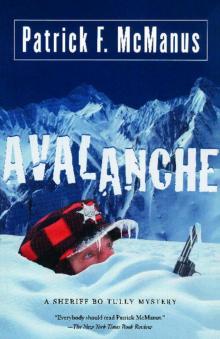
Never sniff a gift fish, p.12
Never Sniff a Gift Fish, page 12


It had soon become obvious to us that the completed plane would be too heavy for the two of us to carry up to the ridge of the barn roof, so we assembled the parts up there. The roof had two angles to it, one about 30 degrees, and the other, the lower one, a steep 45 degrees or so. A shed roof was attached to the bottom edge of the barn roof. Near the eave of the shed roof, Eddie and I built a ramp that, once our plane had picked up sufficient speed in its descent, would loft us up into the clouds, where we would spend the rest of the day riding the wind. Toward evening we would find a gravel bar or a small clearing in the woods on which to practice our bush-pilot landing.
With the aid of a ladder, we managed to get all the parts of the plane up to the ridge of the barn roof and assembled. The bush plane, pointed nose-down, was held in place by means of a rope attached to a weather vane, the knot in the rope being tied in such a manner that the pilot needed only to jerk an end of the rope to release the craft for its descent.
The activities on the roof of the barn provoked much interest among the resident population of sparrows, who kept darting about and offering advice and encouragement, but because the construction had taken place on the side of the barn away from Crazy Eddie’s house, his parents, both of whom seemed to suffer from severe nervous disorders, knew nothing of our activities.
Late in the afternoon, the plane, straining at its tether, was finished. Crazy Eddie, crouched beside me on the slope of the barn roof, could scarcely contain his excitement over the first flight.
“Boy, it’ll be great,” he said. “Just think about it. Soaring around up there in the clouds, looking down at the patchwork of fields, all the cars and animals and stuff real tiny like, and—”
“Yeah,” I said. “You’ll have to tell me all about it after you land.”
Crazy Eddie looked at me. “The wind blowing in your hair, the plane sailing along like a hawk.”
“Hmmm,” I said. “Maybe we both should go. The plane’s got two cockpits, after all.”
“Well, okay,” Crazy Eddie said, with what I took to be a slight ebbing of enthusiasm.
“Say, maybe your folks would like to see us test the plane,” I suggested. “Why don’t you go invite them to watch the takeoff?”
“Good idea!” Eddie scrambled down the barn roof and raced to the house, where he asked his mother and father if they would like to see us test a plane we had built out behind the barn. They said sure, they’d be right out. No doubt they were relieved to learn that Eddie was doing something sensible for a change, instead of getting involved in one of the crazy, dangerous schemes he was always coming up with.
When Eddie returned, I was already seated in the rear cockpit. “I thought you would like to be pilot on the first flight,” I told him. I doubt that I had ever heard that the rear of an airplane is safer in the event of a crash, but my years of associating with Eddie had given me certain useful intuitions.
About then his parents, strolling arm-in-arm, appeared far down below in the barnyard. They stopped and looked around for the plane their son had built.
“Mom! Dad!” yelled Crazy Eddie. “Up here!”
Mr. and Mrs. Muldoon looked up. Both seemed momentarily paralyzed. Mr. Muldoon’s jaw worked up and down, but no words seemed to come out. Mrs. Muldoon sagged against her husband. It was apparent that both of them were overcome with awe by the aeronautical feat accomplished by their only child and his friend.
“Contact!” I yelled.
“Roger!” Crazy Eddie yelled back, giving his parents a jaunty salute.
Mr. Muldoon yelled something, too, but we couldn’t make it out, because Eddie had already jerked loose the knot and the wind was rushing in our ears.
Our flight plan worked out just as we had intended. Oh, at first there was some shrill screeching from down below and I had the vague impression of cows leaping fences and trying to climb trees and terrified chickens and geese raising a terrible ruckus, but then the bush plane hit the ramp on the shed roof and we were lofted high into the air. The wind caught us and carried us even higher, and it was wonderful. Far down below we could see tiny houses and horses and cows in the patchwork fields and miniature farmers waving to us from miniature tractors, and there was Sand Creek, like an embroidered line of green and blue meandering through the countryside, and then we soared higher still and were in the clouds, white puffs of vapor floating up like cotton candy, and it was all very lovely and exciting, except I had this pain in my body, and my head ached.
When I opened my eyes, Mr. and Mrs. Muldoon were bent over me, both of them strangely white of face. They were blurred, too, but because their surroundings were in sharp focus, I determined it was because of their shaking.
“Are you all right?” Mrs. Muldoon asked, wringing a stream of perspiration from her hands.
“Yeah, I guess so,” I said, propping myself up on an elbow. There was a manure pile nearby and on top of it a pile of kindling and two wagon wheels. Mr. Muldoon said the manure pile had probably saved our lives.
Not too bad, I thought. Any old bush pilot could land on a gravel bar or a little clearing in the forest, but I’d like to see one of them land on a manure pile and live to tell about it.
Both Crazy Eddie and I recovered quickly. In fact, the only lasting ill effect of the bush-plane flight was that the Muldoon cows walked around for weeks afterward with their heads turned to the sky, as if expecting some assault from outer space. Crazy Eddie and I used to chuckle at them while we were building the submarine.
Share and Share Alike
The sharing of a single big-game animal between two hunters is at once the most delicate and the most complex problem encountered in hunting, with the possible exception of deciding whose vehicle to drive on the hunt. It may be useful to examine the problem in some detail.
Let us begin with a hypothetical situation. As is well known, an elk that is shot dead within fifteen feet of your hunting vehicle will still pull himself together enough to gallop to the very bottom of the steepest canyon within five miles. This is known as the elk’s revenge. Assume you have just shot such an elk. You and your hunting partner, whom we’ll call Bob, have tracked the elk to the bottom of the canyon. As you stand over the massive form of the felled but still magnificent animal, you become contemplative. One of the things you contemplate is how much bigger an elk is at the bottom of a canyon than it is fifteen feet from your vehicle. (Scientists have calculated that a wounded elk will add fifty pounds to its weight for every hundred yards it gallops down into a canyon.) You now ask yourself two questions: (1) How are you going to lug the elk back up to your vehicle? and (2) Why didn’t you go golfing today instead of hunting?
With three round trips each, you and Bob manage to pack out the elk section by section. Neither of you experiences any extraordinary ill effects from the exertion, other than the seizing up of major portions of your cardiovascular systems. Bob lies wheezing by the side of the road, a haunch of elk still strapped to his back. You are walking around on your knees and mumbling about “getting in shape” and not caring if you “never see another bleeping elk.” At this point you are willing to give the entire elk to Bob, provided that he lives. Your intimate association with elk meat over the preceding hours has diminished your appetite for the stuff and has resulted in a psychological malfunction known as excessive generosity. Wisely, you put off the decision of what share of the elk should go to Bob until you are rested and your mind has cleared.
The culinary aspects of elk meat improve in direct proportion to distance in time from the packing-out process. A week after the hunt, during which time the elk has been aging nicely in a cooler, the thought of all those steaks and roasts stashed away for the winter is intensely satisfying. There is still the problem of what portion of the elk should be Bob’s share. You are now in the proper frame of mind to make this decision.
Your reasoning goes something like this: For openers, you consider giving Bob half the elk. Once you have enjoyed a few moments of mirth over this ridiculous notion, you get down to serious figuring. Using half an elk as base, you deduct from it five pounds for each day remaining in the elk season, days in which Bob might very well shoot his own elk. You make further deductions for the amount of whining Bob did while packing out your elk. Then there is the matter of that unseemly phrase Bob blurted out when he learned the elk you had shot was at the bottom of a three-thousand-foot canyon—more deductions, all of them choice cuts. You don’t forget Bob’s tripping over a log and cartwheeling down the slope with a hindquarter strapped to his pack-board. That bruised a lot of meat, some of which was elk. Further deductions. When you finally total the figures, you discover that Bob now owes you approximately one quarter of an elk. The charlatan hasn’t even had the courtesy to mention the matter of this debt to you. And to think you trusted him enough to let him help pack your elk out of a three-thousand-foot canyon! Some gratitude!
In the end, your calculations are for naught. Your spouse demands that you give Bob a generous share of the elk. You acquiesce reluctantly but eventually conclude she was right—although this conclusion does not arrive until the middle of April, when even the thought of one more elk roast blights your day.
“What’s for supper?” you ask your wife.
“Elk,” she replies.
“Aaaack!” you say. “How about TV dinners? I’m sick of elk!”
“You shot it, you eat it!”
“I know, I’ll call Bob. He would probably like some more elk.”
“Are you kidding?” Bob responds. “I’m fed up to my follicles with elk! I couldn’t choke down another bite of elk if I lived to be five hundred!”
“Oh yes you can and you are! You didn’t take your full share of the elk! You packed it out and you’re going to eat it!”
In this way, the problem of sharing a single big-game animal between hunters usually resolves itself.
My first encounter with the problem of sharing a big-game animal occurred when I was sixteen. I was hunting with my cousin, Buck, who was several years older than I. At that time, Buck was at the height of his intellectual powers and knew all there was to know about hunting and most of everything else. Some people are stingy with their knowledge and try to hoard it, but not Buck. He handed his out freely and voluminously and endlessly, at all hours of the day or night, whether one was in the market for knowledge or not. Naturally, because of his towering intellect and absolute knowledge of all matters pertaining to hunting, Buck got to devise our field tactics.
Shortly after dawn, as Buck was bathing my semi-consciousness with a steady stream of his hunting knowledge, I glanced up the side of the mountain to clear the glaze from my eyes and spotted five specks. The specks were moving.
“Buck, there’s a herd of mule deer up there!” I shouted.
Since part of Buck’s knowledge consisted of the natural law that he was the only one who could spot deer first, he dismissed my report with a chuckle and the comment that the specks I saw were probably on my glasses.
Then he stopped the car and got out, casually, as if to stretch and satisfy a need for a breath of fresh air. He got back in the car, shook a cigarette from a pack, lit it, blew out the match. “There’s a herd of mule deer about halfway up the mountain,” he said. “When you’re driving out to hunt mule deer, it’s a good idea to stop every once in a while and check the slopes. Now you take these deer here, we might have missed them if I hadn’t stopped for a look around.”
“Good, Buck, good. I’ll try to remember that.”
Buck then laid out the tactics. “Now here’s what we’re going to do. You work your way up the mountain toward the deer. I’ll drive around to the top of the mountain and wait on the road just in case they try to cut back over the ridge.”
“Why don’t you climb the mountain and I drive around on the road?”
“Because it wouldn’t work, that’s why. Besides, if the deer cut back over the ridge, we want to have the best shot to be waiting there.”
“Oh.”
I got out to start working my way up the mountain, and Buck drove off, leisurely smoking his cigarette and fiddling with the radio dials. There was about a foot of new snow on the mountain, and the climb was cold, slippery, and exhausting. Occasionally a fir tree would unload a bough of snow down the back of my neck, and that didn’t improve my mood, either. Nor did the thought of Buck sitting in the warm car at the top of the mountain, drinking hot coffee from the thermos and smoking and listening to the radio, while he gave the deer time to detect my presence and then retreat practically into his lap.
But it didn’t work out that way. All at once I found myself right in the middle of the herd of mule deer. A nice little buck stepped from behind a tree and stared at me, as if astonished to find a human being stupid enough to be climbing a snow-covered mountain that early in the morning. I downed him with a single shot. The rest of the herd raced off in all directions, except toward Buck. An hour later I was back down on the road with my deer. Buck, who had witnessed the “whole fiasco,” as he called it, was waiting for me. He was hot, too.
“Boy, that was dumb!” he snarled. “Shooting that itty-bitty buck when there was one three times as big in the herd. I knew I shouldn’t give you the best chance, but since you’re just a kid and all, I thought I’d do you the favor. Boy, did you blow it!”
We rode in silence all the way home, Buck occupied with what I could easily guess were dire thoughts, and I, with gloating. When you’re sixteen and wear glasses and aren’t that good at sports and spend a good deal of time in the company of an intellectual giant, you don’t get much opportunity for gloating. When you do, you savor it.
“You just remember,” Buck said, after dropping me and my deer off home, “part of that deer is mine.”
When I got around to cutting up the deer, I at first considered giving Buck a full half of it. On the other hand, I had my mother, grandmother, and sister to provide wild game for, and Buck lived by himself in an apartment. If he tried to eat half a deer all by himself, he would soon become sick of venison and wouldn’t want to go deer hunting ever again. No, I told myself, it would be better if I gave him only a hindquarter. That would be about right for one person.
On the other hand, steaks cut from the hindquarter of a deer are awfully good eating. Buck might use a venison-steak dinner as bait to lure one of his girl friends into his apartment. That in all probability could lead to Buck and the girl committing a serious sin. Since my religion forbade even contributing to serious sin, I was not about to risk going to hell over a hindquarter of venison. No sir, Buck would have to make do with a front quarter.
But which front quarter? That presented no real difficulty. Because of Buck’s interest in science, he would be intrigued by studying the effect of a .30/30 slug on the shoulder of a deer. There was still a lot of good meat on the shoulder, too.
Upon further consideration, I decided that Buck might prefer to forgo his scientific studies and have the shoulder ground up into venison burger. So I ground up the venison for him.
Well, that turned out to be an awful lot of venison burger for one person. I started dividing it up into neat little piles, until I found the exact amount that I thought would be suitable for Buck. I then left his share on the table while I went to deposit the rest of the venison in the cold storage locker.
A few days later I ran into Buck. “Hey, you little rat,” he greeted me, “where’s my share of our deer?”
I shook my head sadly. “You may have some trouble believing this, Buck, but while I was taking my share down to the locker, the cat got in the house and ate your share.”
Buck did not take the news well.
Never Sniff a Gift Fish
There is one thing about my neighbor Al Finley that irritates me. Well, actually, there are many things about Finley that irritate me, but one stands out from the others. It is his constant seeking after immortality.
I don’t mean to say that Finley wants to live forever, although he probably has that in mind, too. And if the population of the world should one day increase to the point where people are standing on each other’s shoulders, you can bet Finley won’t be one of the guys on the bottom. No, he will be up on top, shouting orders to the fellow down below to step along faster and watch out for the bumps. That’s the sort of person Finley is.
On the off chance he doesn’t achieve immortality for his person, Finley at least wants it for his name. He is driven by this ambition.
For a while, he thought he might achieve lasting fame by writing poetry. When his masterwork, “Ode to a Liver Spot,” brought him bad reviews and several threats against his life, he decided he might stand a better chance of achieving immortality in the sciences. His anti-gravitational device worked but once—when his wife stepped on it while cleaning the basement—and it worked then only because she thought it was something that had crawled out from behind the furnace.
After reading a book on Disraeli, Finley decided he was destined to become a great statesman. He won a seat on the city council and quickly became a master of political acrobatics. He now straddles fences, juggles books, and can change horses in midstream without rocking the boat. Nevertheless, it appears that he will not rise above the level of city councilman, which is a good sign that the system works.
Despite Finley’s pitiful failures at achieving immortality, he continues to pursue his quarry, like an untrained pup let loose in the fields, to whom every grasshopper is a rabbit in disguise. His most recent quest for lasting fame took shape on a fishing trip with Retch Sweeney and me.