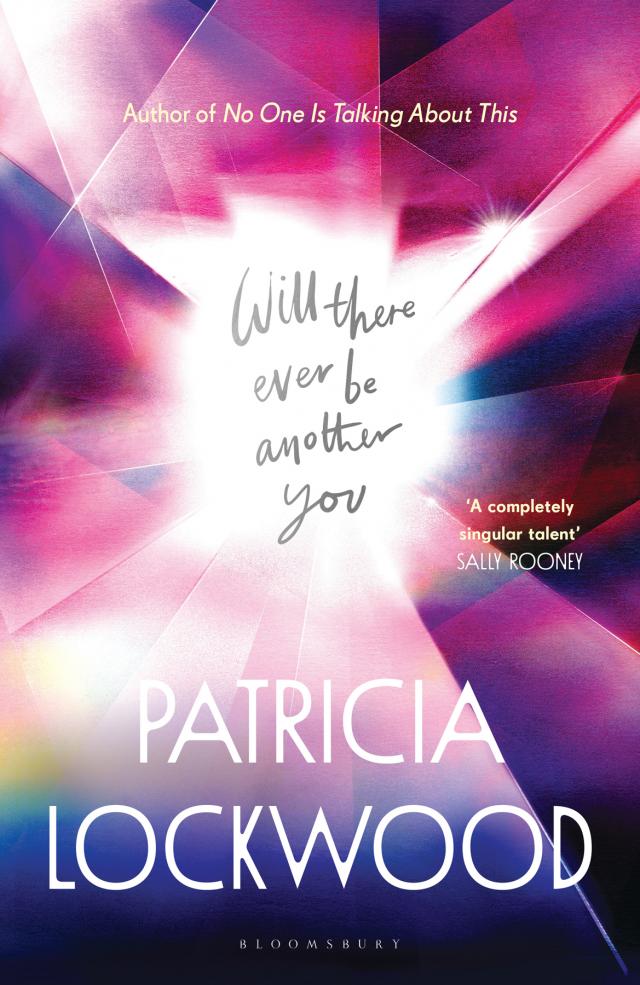
Will there ever be anoth.., p.1
Will There Ever Be Another You, page 1


One of us (i.e. a human being) should be imagined as having been created in a single stroke; created perfect and complete but with his vision obscured so that he cannot perceive external entities; created falling through air or a void, in such a manner that he is not struck by the firmness of the air in any way that compels him to feel it, and with his limbs separated so that they do not come in contact with or touch each other. Then contemplate the following: can he be assured of the existence of himself?
—Ibn Sina
CONTENTS
Part One Fairy Pools
The Changeling
Part Two Presence
The Artist Is Present
Hashish in Marseilles
Mr. Tolstoy, You’re Driving Me Mad
The Wheatfield
Schutzenfest
Be-ing A-live
Shakespeare’s Wife
Boys Over Flowers
Part Three Hidden Track
Life-and-Death
The Wound
Doppelgänger
The Scrapers
Beginning Metals
The Art of Biography
The Ranking of the Arts
Epilogue
A NOTE ON THE AUTHOR
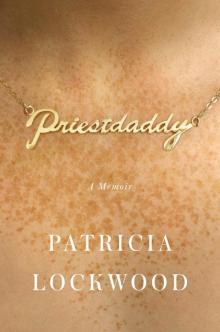
Patricia Lockwood is the author of five books, including the 2021 novel No One Is Talking About This, an international bestseller which won the Dylan Thomas Prize, was shortlisted for the Booker Prize and the Women’s Prize for Fiction and was translated into twenty languages. Her 2017 memoir Priestdaddy won the Thurber Prize for American Humor and was named one of the Guardian’s 100 best books of the 21st century. She also has two poetry collections, Motherland Fatherland Homelandsexuals (2014) and Balloon Pop Outlaw Black (2012). Lockwood’s work has appeared in the New York Times, New Yorker and London Review of Books, where she is a contributing editor. She lives in Savannah, Georgia.
Part One
Fairy Pools
As soon as she touched down in Scotland, she believed in fairies. No, as soon as the rock and velvet of Inverness rushed up to her where she was falling, a long way through the hagstone hole of a cloud, and she plunged down into the center of the cloud and stayed there. You used to set a child out for them, she thought, and was caught in the arms, and awoke on the green hillside.
“Sco’land,” she heard her mother say, in a voice weak from lack of iced tea—they were barely alive, after five hours on the runway in Chicago and another ten in the air. “It’s not the first real day,” her husband kept reminding them; after a short stay in Inverness that night, they would go on to Skye tomorrow. He jangled a set of keys. In Ireland, two years before, it had transpired that her husband, a contrarian, was born to drive on the wrong side of the road, while her mother, a worse contrarian—and whom she had defeated by marrying the former—planned to drag them all to hell that way. “So I’ll drive,” he told her mother now, very loudly, “and you sit on the passenger side and slam your foot to the floor whenever I get too close to a low stone wall.” Deal, her mother agreed; she would also provide commentary, and throw in those sharp little gasps for free.
She herself was silent and let herself be carried, on and on toward the green hillside. The trees corresponded to an obsessive high school reading of The White Goddess. The sheep were spray-painted according to who owned them. Actual lambs frisked in the fields, on legs like little girls’. Wait, she thought, am I confused about changelings? You put them out, did you get anything back? Or they were taken from you in the night, and you woke up one morning …
Her sister sat apart from her in the rental car. Her head was full of the Child, lost to them all just that January. From time to time you saw her flicking through pictures on her phone with a chipped hot-pink manicure, so quickly that she appeared to be alive. As if she were smoothing a forehead, or touching away an eyelash, or wiping milk from a mouth, and once again the whole life was in motion.
“Wide load,” she heard her mother saying to the asses of the sheep, as if they were women.
Upon her arrival, instead of taking pictures of the North Sea, she had taken pictures of elk bellowing on the walls and a little guy who appeared to be penetrating his bagpipes. This was her typical routine in other countries, to first take pictures of their pictures. It was how you entered into the spirit, and by eating the complimentary oatcakes that had been left in your room, with its conscious and unconscious plaids: light, shadow, her hand crossed over her sister’s, and that life called through-the-window.
Which called them out. She picked up a stone from the shore of the North Sea, with a ring of mica around the top like the city flashing on the water, and they piled into the car to go looking for it, wrapped in a series of preposterous scarves. When she thought of changelings, hadn’t it been mostly of the way they were wrapped—in rough gray cloth, with a triangle of face shining through?
Between the time her mother had gone into her hotel room and the time she reappeared in the hall, her jeans had become wet. They would not dry for the rest of the trip. The wetness came to represent, in the rest of their minds, the iced tea she could never get. “Tea … with ice?” she would ask hopefully, making a series of gestures to communicate the concept of iced tea, and be brought a cup with three cubes in it by someone who looked almost medically concerned.
“Tea … with ice?” she asked at the restaurant, holding up her hands like shocked daisies next to her eyes. They had gone to three or four places before finding one that was open. The chef, in a white hat, laughed and entered her conspiracy. The night flowed like just-struck oil outside the windows; she tried to fix the details of it in her mind. She never remembered the first night in another country—something to do with the change in altitude, or as if she really had touched down in another world. The restaurant, she would not remember later, was actually called Kool Runnings.
Back at the hotel bar, the bartender told them the lamentable story of Irn-Bru. It had once been sweeter, now it was less sweet. There were petitions, and people hoarding it by the case in their flats. She ordered one from him to make friends, for short of that she saw no other way of doing it. Scottish bartenders had been given the opposite instructions to American ones. The taste, a pink electrocution of the tongue, was indescribable—and there was a version that was more so? She decided that if she were presented with a petition, she would sign it. And also support Scottish independence, if that were correct. Maybe now that they were friends, she could ask the bartender. But, “Tea … with ice?” her mother asked him, and the chance was gone again.
And so that was Loch Ness? She followed her sister through the ruins of the castle that overlooked it, taking pictures of her in empty windows. Her gold hair whipped. Her pink lipstick, drawn far beyond the outline of her mouth, smiled without her. People had really lived here. Could you still surprise someone’s breathing near the ceiling, as you could upstairs in her sister’s house? How long did that last?
Her husband rubbed his hands. Finally, a country where the women were wearing enough cloth, and where the wind persisted in exposing the tips of their ears. He had turned to pure itinerary; his mind was full of mileage, national parks, famed distilleries, tallest peaks. At this point he believed he was Scottish—everywhere they went they saw bald heads that looked like his. “One of me!” he would cry, pointing them out; a country full of thousands, and she had reached out and taken one. She fondled the mica stone. Maybe the soul was just that dearness nestled in the center of the body, like a chosen pebble in the palm of a hand. When you held someone it was that dearness you felt, that chosenness.
And he was dear. He would sniff the air and stop the car and say, “Macbeth lived here.” He knew where there was Red Bull and where there might be ice—three cubes of it, for her mother. In the car they played a game of Would You Rather, except they misremembered it as I Would Never. This limited things somewhat. Her husband won easily. “I would NEVER do that!” he kept shouting, and then put down another point for himself.
He had done all this to rinse her sister’s mind of pain. Pain was one of the things he could not stand, along with muppets—“I can feel them getting dirty”—and receipts, which were endocrine disruptors. “No thank you,” he said to the man in the gas station, purchasing four cans of the less sweet Irn-Bru. Keep moving, he said to them, in his long striding body. One foot in front of the other, or die.
She did what she always did in a car: looked out the window, trusted, and let herself be carried along. The easiest life to imagine was the life of the postman. The easiest life to imagine was the life of the man who ran the ferry. The easiest life to imagine was that of a child, in the castle that sat on the shore of Loch Ness—where the water was full, it was true, of little slipping necks. You could just grab on.
They took turns reading to each other from Wikipedia: about fighting hares, the symbology of thistles, which time of year the heather bloomed. The list of historical guys who actually believed in fairies was pretty long, she told them on the way to Glenbrittle. Her husband would have to update her entry to say that she had joined it.
‘Did you ever see a fairy’s funeral, madam?’ said Blake to a lady who happened to sit next to him. ‘Never, sir!’ said the lady. ‘I have,’ said Blake, ‘but not before last night.’ And he went on to tell how, in his garden, he had seen ‘a procession of creatures of the size and colour of green and grey grasshoppers, bearing a body laid out on a rose-leaf, which they buried with songs, and then disappeared.’
The Fairy Pools had been poured down. The walk up was like the slow exploration of the skeleton of an animal, whose life was reenacted here and there with plunges of crystal water. There were natural bridges, caves heaped with uniform gray treasure, keyholes of bloodstone-colored water, raindrops on the lens, trees clinging to cliffs, the falls too fast for cameras, like fairies, and the long natural stairs that her sister climbed. People spoke every language. Europeans, who knew which laws to disregard, were stripping off their clothes and swimming. You could pose with a Red Bull next to the tallest waterfall and make it seem like you were peeing. A perfect place.
They drank the water. Her husband sat on the edge of the deepest pool, which touched the center of the earth, and scooped it into a survivalist water filter he had bought on the internet. “This will let you drink water from ANYWHERE, in any situation,” he had told her intensely when it arrived in the mail. Of course more and more of these situations were arising. As a child she had watched Kevin Costner drinking his own freshly distilled piss in Waterworld and just assumed it was something she would have to do as an adult, for the world would be different. They all drank a long swallow of the cool clear water, which was somehow inflected with the word green. It went clear down into the center of her, through the hagstone hole and the natural arch, to plunge down the stairs of living rock. Inside her, Europeans stripped and splashed. Now we are refreshed, he said. Now we can go on.
Twenty pictures in her photo roll later, her sister’s phone disappeared. Her black-and-white scarf and her rose-gold phone, with the Child’s whole short life on it. It had been in the hospital with them, in the right hand, always. It had been what the next one would not be, a warm eyewitness. She was holding it in one picture, and then she wasn’t, a bald mountain behind her. Her sister’s face closed, impassable; there and then gone.
“I can find it,” she told her, desperate—she always had. Five dollars in a parking lot, when that was real money.
But there had been a switch. When she went up, the pools looked one way, but when she came down again, looking for the rose-gold phone, they looked another way—as if they were a story that needed to be told in order, from the beginning, without leaving anything out. Maybe this place was like the world—you could only travel through it once. She rolled her ankle on the rocks. An hour passed, and then another. “As soon as we get back in cell phone range,” her husband kept telling them, “we can just call …” But no one listened. Her sister’s sere hair went among the grasses; her head was full of the Child.
“We shouldn’t have drunk the water,” they would say later. It had angered the fairies—no, not angered. They simply demanded something in exchange. But as soon as they saw what was on the phone, the face, the flicking motion, they knew it was too much. They would give it back and keep only the scarf, which was just from Target.
She fondled the mica stone. It stayed in her right hand, always. She had picked up others along the way: another off the shore of Loch Ness, another while bouldering in Sligachan, and another at the roadside stop where a horse lifted up her sweater to nuzzle her belly as if he loved her. Maybe she was preparing to build a cairn, which in their miniature versions were everywhere. They snagged her eye, always. How did they stand? The balancing of the tallest cairns seemed to indicate that there were properties of physics we did not understand, or else they were overruled by the earth’s desire to be surprising.
The feeling that she was not quite herself began as they approached Glenfinnan. Her body went ahead of her into the church, rippling with bottle-brown light. Irn-Bru, she thought. Sign the petition. Her eyes, floating a little in their sockets, went on looking: a vase with two daffodils, a statue begging for money, a historical plaque next to pictures of water damage on the pillars, which at one point had had to be replaced. “Not an easy task considering the size and weight of the stones, and the height!” the plaque yelled. “We never want to see this again.” Ha ha, she heard herself saying, and placed a coin in the little plaster purse.
The feeling intensified at the Information Center, where she found herself sliding down the wall with headphones on while listening to an interminable murder ballad. It came to her: She was being murdered. The bridge overhead was bearing down on her. The church was falling toward her, with its spire. Her skin, in the bathroom mirror—we never want to see this again, she thought. “Where have you been?” her husband asked, when she emerged twenty minutes later. It was strange to know that when something was really wrong with her, no one would be able to tell.
“Faster,” she told them in a monotone, as her husband sped the car toward the castle. Something was going to happen, she didn’t know what. After they checked in, she sat with them for ten minutes on the terrace, where the sun was spilling like chardonnay into the spread of the hills. The landscape suddenly appeared to her as one in which she was being hunted. “Good night,” she told them formally, in the monotone, and went upstairs. Something was going to happen.
A maid came to the door and asked her if she wanted something untranslatable. Her mouth, pale in a cameo face, formed the words several times. I cannot understand you, she finally wept. Then, as she closed the door it came to her: turndown service. A little chocolate in the center of the pillow. The maid was Eastern European, and all at once she felt, like four segments of an orange, the rotation of the world that had brought her here, and she stumbled out into the hall to say that it wasn’t the accent, it was a problem with all language….
Bathroom, she thought. I live in the bathroom, and went to press her face against the rug. Why were the Fairy Pools so green, she wondered, and rose to her knees, and ejected a long green waterfall into the trash can. Shall not mine true love staye with me when I am hurling, she thought, for she had suddenly remembered about the existence of Olde English. What was under her legs now, what was carrying her to the bed—it was the old mistaken movement of the word moor. Arranging her head in the center of the pillow like a mint, she took a series of pictures as proof: She would show them all later, how close to death she had come. And leaned over like a cliff to release another waterfall.
Arugula, she thought. I’m going to die alone in a Scottish castle because people have gotten too good for iceberg lettuce. Then remembered the Jamaican restaurant that the chef had kept open for them on that first night, bringing them mussels and baby clams and the firm cheeks of something that had no name. Could be, she thought, remembering how her husband always insisted she had a shellfish allergy that she would not, or could not, accept. But she kept coming back to the coldest water in the world, that had gone down into the center of her, that belonged then and now to the fairies.
Fucking survivalists, she thought. Fancy cups. Bug-eating. No respect. They think they’re preparing for any contingency, but they have no idea. They think regional camo will protect them. They think they’re ready to leave the weak ones behind in the woods. They think there’ll be no money.
Her body was so heavy. The Child was in all her limbs, she was carrying her through thickets and over green hills, laying her down nowhere, or else she would be taken. If she could feel her, as she had never before been able to feel anybody on this earth, it is because she was the right size. Why had no one been the right size before? A knock on the door. A shape passed by her, neatly tied up her arugula, and made it disappear.
Downstairs on the fairy tale terrace, over an exorbitant Scottish cheese board, her mother and husband and sister were all screaming at each other. Her mother had misread something about the Property Brothers on the internet and was insisting that they were persecuted for being Christian. Their show had been canceled, she shouted, because of their embrace of the true faith! Her husband explained that they were Canadians, and Canadians didn’t have faith. But she got redder and redder, believing that they were concealing reality from her. It was the Property Brothers, and they had lost it all! Later it turned out that her mom had gotten them mixed up with a pair of homophobic real estate agents. That was the sort of mistake people made now. It was hard to know how much to yell at her about it, because one day she would die. Also she had taken care of the Child. You could only think of her hands cupping the large head, and how one day the Child had let her head fall forward, it seemed purposefully, so that her open mouth landed smack against her grandmother’s cheek. They decided to call that a kiss, for narrative purposes. They made many such decisions in those days.